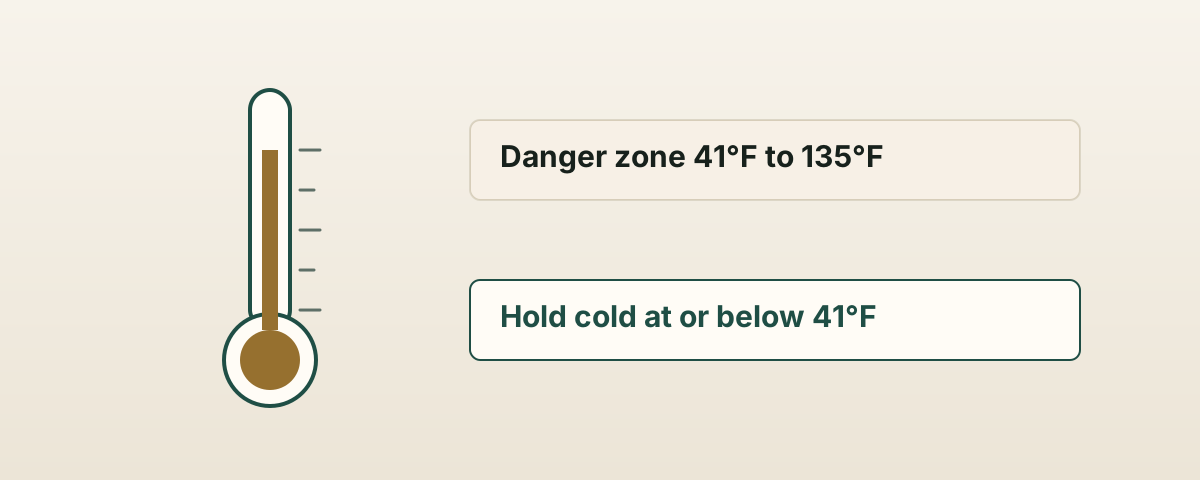
Temperature control is one of the most important food safety habits, and one of the most number heavy. Workers are asked to remember several thresholds, read a small display, and record readings on a log. For employees with dyslexia, dyscalculia, or other learning disabilities, the barrier is often the numbers and the paperwork, not the safety concept itself.
I argue that the task can be redesigned so the numbers do less of the work. A thermometer chart can use color bands, with a clear green range for cold holding at 41°F or below and hot holding at 135°F or above, and a red band for the danger zone in between. The employee's job becomes matching a reading to a color, which is easier to learn and easier to check.
Training should follow the same logic. Break the check into a short sequence of steps, demonstrate each one with the actual thermometer, and let the employee practice until the routine is automatic. A pictorial step card at the station supports memory, and a log with check boxes or color stickers can replace handwritten numbers where local rules allow.
These changes do not lower the standard. They remove obstacles that have nothing to do with keeping food safe, and they tend to make the routine clearer for every employee on the line, including anyone who finds a busy shift distracting.